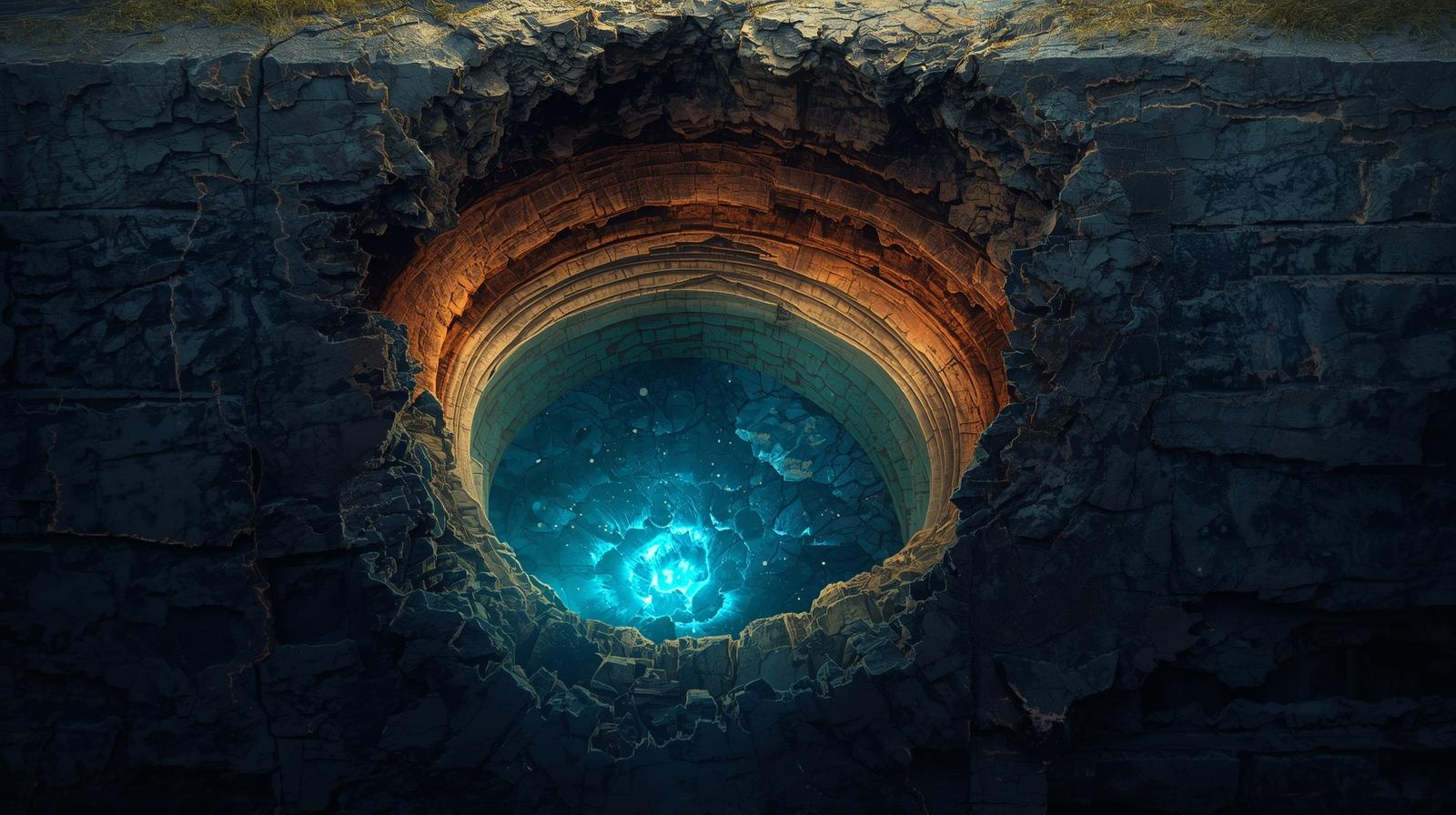
In 2025, scientistsdiscovered a massive hidden ocean beneath Earth’s crust, offering new insights into the planet’s water cycle and deep underground ecosystems.
H1: Earth Holds a Secret Ocean
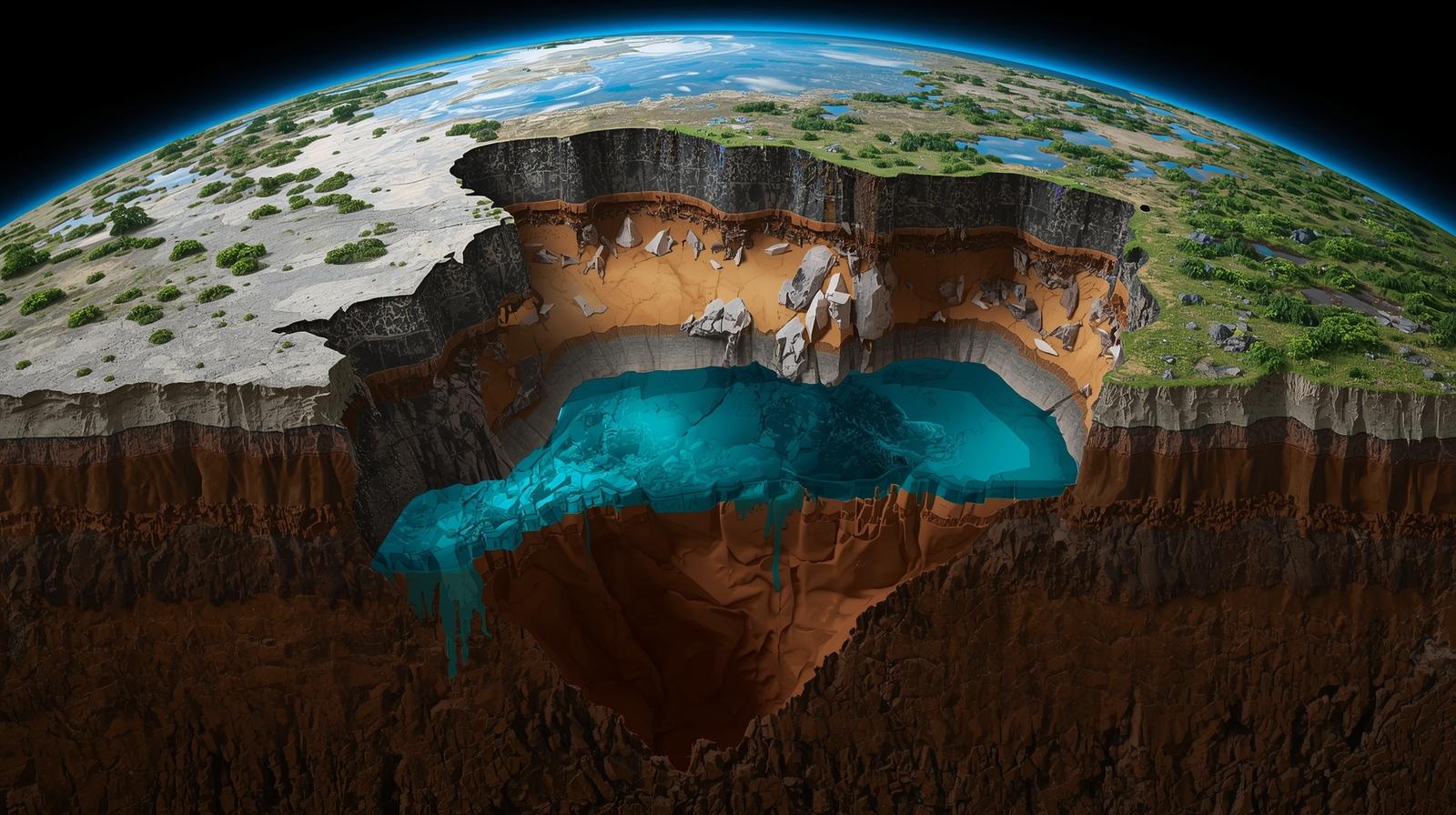
For centuries, scientists believed that Earth’s water existed primarily in rivers, lakes, and oceans on the surface. In 2025, a groundbreaking discovery revealed a hidden ocean beneath Earth’s crust, trapped in minerals and rock formations thousands of kilometers below the surface.
This underground water reservoir is estimated to contain more water than all surface oceans combined, drastically changing our understanding of Earth’s geology, water cycle, and potential habitats for life.
Dr. Elena Morris, a geophysicist at the University of Tokyo, stated: “Discovering this hidden ocean is like finding a vast, invisible reservoir beneath our feet. It reshapes how we think about Earth’s structure and water distribution.”
H2: How Scientists Made the Discovery
The discovery was made using a combination of advanced seismic imaging, high-pressure laboratory experiments, and computer modeling.
-
Seismic Imaging: By analyzing earthquake waves, researchers mapped deep rock layers, identifying areas with unusual water signatures.
-
Mineral Analysis: Certain minerals, such as ringwoodite, can trap water in their crystal structure. Samples brought to the surface confirmed water content.
-
Computer Simulations: Advanced modeling helped scientists estimate the volume of water in deep Earth pockets, revealing a potentially massive reservoir.
This multi-disciplinary approach allowed scientists to visualize a hidden world beneath the crust, previously inaccessible and unknown.
H3: Why This Discovery Matters
The hidden ocean is more than a scientific curiosity. It could explain several geological phenomena:
-
Volcanic Activity: Water trapped in rocks contributes to magma formation and eruption behavior.
-
Earthquakes: Water in deep rock layers influences stress release along fault lines.
-
Surface Water Sustainability: Earth’s underground water may replenish surface reservoirs over geological timescales.
Understanding the hidden ocean helps geologists, climatologists, and hydrologists better predict natural events and manage water resources.
H4: Life in the Deep Earth?
The hidden ocean also raises exciting questions about life:
-
Could microbes survive in such extreme pressures and darkness?
-
What adaptations would allow organisms to thrive kilometers underground?
-
Could studying these ecosystems reveal new enzymes, chemicals, or antibiotics?
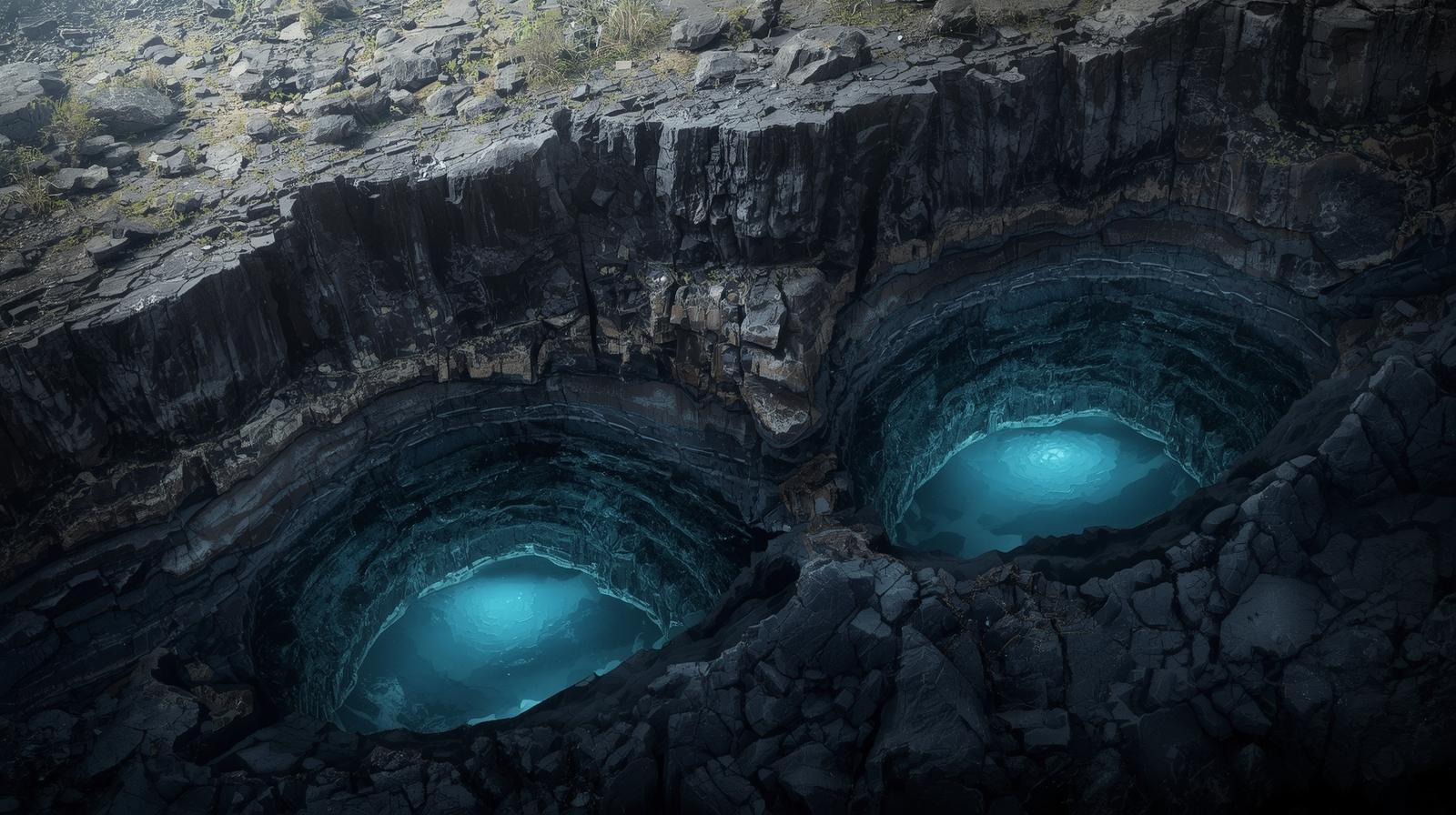
Preliminary research suggests a deep biosphere may exist, where microbial life survives independently from sunlight, feeding off minerals and chemical reactions.
H5: Implications for Planetary Science
Earth may not be the only planet with hidden oceans. Discoveries of ice-covered moons like Europa and Enceladus hint at subsurface oceans beneath their icy crusts. Studying Earth’s deep ocean could provide a blueprint for understanding extraterrestrial environments, potentially guiding the search for life beyond our planet.
H6: Challenges for Research
Exploring a hidden ocean thousands of kilometers below the crust is extremely difficult:
-
Extreme Pressure and Temperature: Deep rock layers are under conditions humans cannot survive.
-
Limited Access: Direct sampling is nearly impossible; most research relies on indirect measurements.
-
Complex Modeling: Simulating water behavior under such extreme conditions requires powerful supercomputers.
Despite these challenges, the discovery has opened a new field of geoscience research, combining geology, chemistry, and biology.
H7: The Future of Deep-Earth Exploration
Next steps for research include:
-
Developing robotic drills to access deep rock formations safely
-
Using advanced imaging technologies to map water pockets globally
-
Studying potential microbial life for medical and industrial applications
-
Comparing Earth’s deep ocean with subsurface oceans on other planets
These efforts may transform our understanding of planetary formation, water cycles, and the origins of life.
H8: Public and Scientific Impact
The hidden ocean discovery has captivated both scientists and the public. Social media buzzed with news articles, videos, and infographics illustrating this unseen world. Educators are using it to teach Earth science, geology, and environmental awareness, while scientists collaborate internationally to expand research.
Conclusion
The 2025 discovery of a hidden ocean beneath Earth’s crust is a reminder that our planet still holds secrets. From reshaping our understanding of geology to raising questions about life in extreme environments, this finding highlights the importance of exploration and curiosity. As research continues, this hidden ocean may reveal insights not only about Earth but also about life on other worlds.